
SoFi is a global leader in digital finance, with over 7.5M members and 34B in debt paid off. However, while its current product suite houses over 10 products, it lacks one tailored for a major market: small business owners. I worked with SoFi to build a Small and Midsize Business (SMB) Expense Management Platform that makes the financial management experience feel accessible and tailored to SMB needs.
With a suite of over 10 products, SoFi presented a problem packed with ambiguity and potential cross-product integration. They were seeking a highly tailored business management platform that enables small business owners to take concrete actions towards their goals, as well as easily understand their business performance.
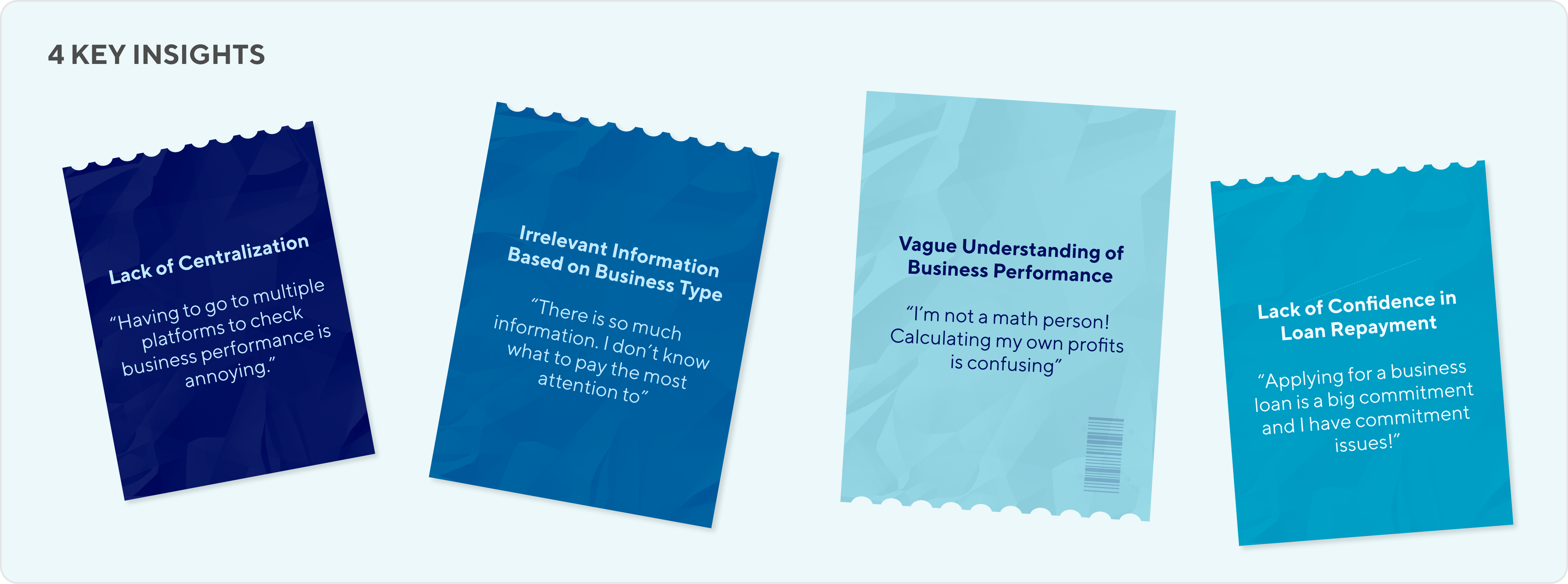
To identify opportunities in the existing market, I interviewed small business owners across industries like retail, food service, and more. From our affinity diagram, my team and I synthesized the following key insights:
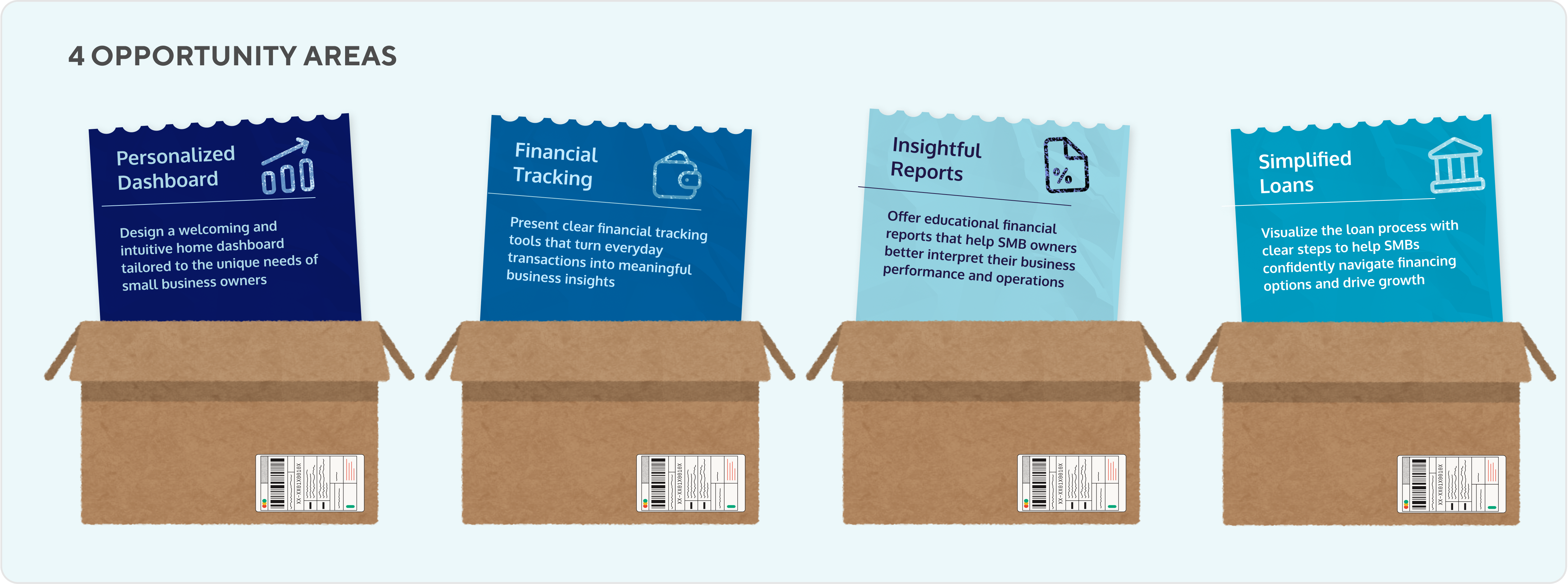
I took ownership of the Financial Tracking feature, leading the design to help small business owners better understand their financial data and business performance. My focus was on transforming complex, fragmented information into clear, actionable insights: How might we simplify overwhelming financial data for busy entrepreneurs?
To help SMB owners make sense of fragmented financial data, I sketched low-fidelity concepts that present everyday transactions in a clear, organized way. The goal was to translate raw data into meaningful insights that reveal business performance at a glance.
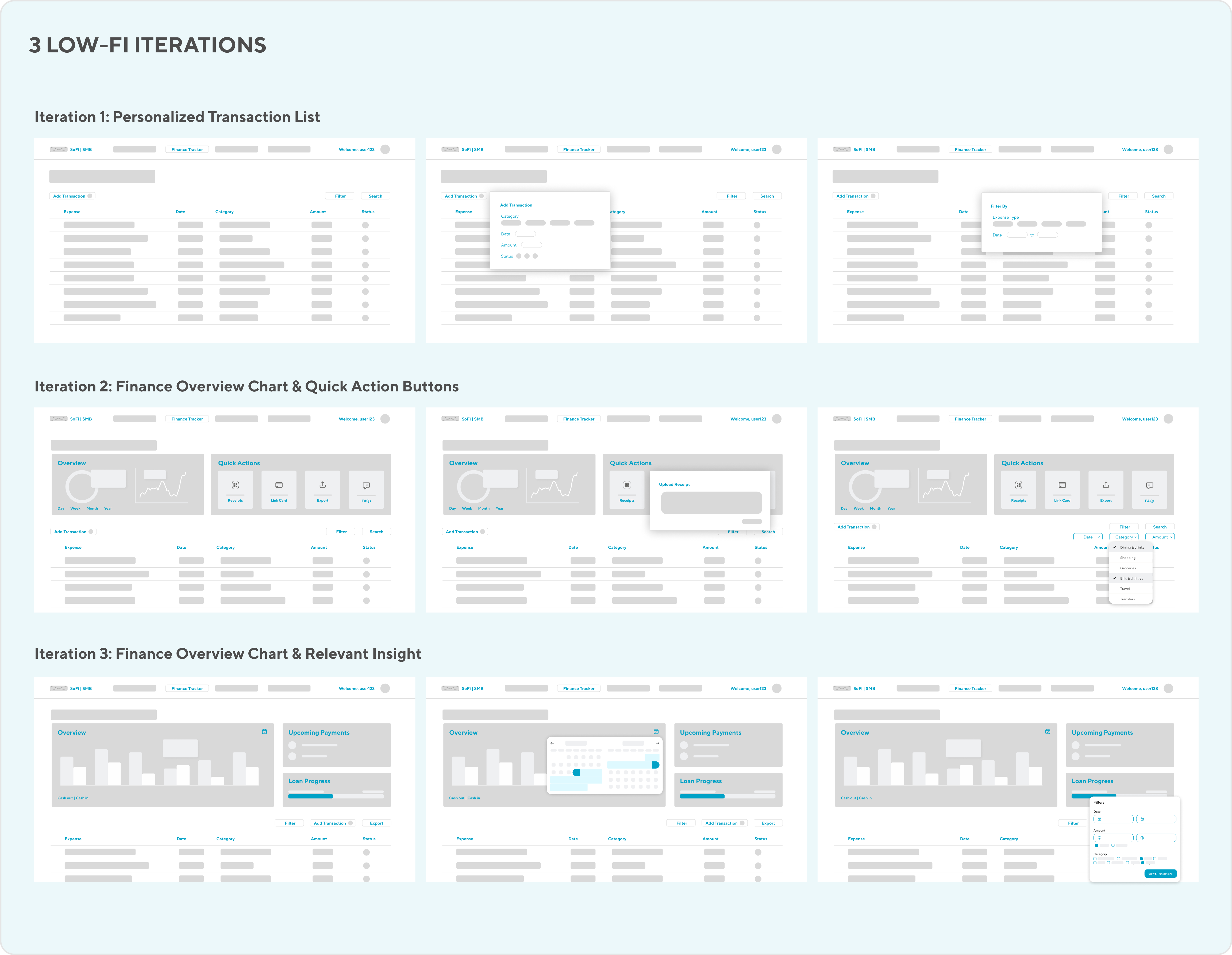
In our weekly client syncs, we gained a deeper understanding of their backend infrastructure, which informed our decision to build upon Iteration 3. The client emphasized a preference for personalization over full customization in users' financial tracking experience. Our UX research also revealed that users often rely on physical receipts and external tools like spreadsheets for familiarity. With these insights, I focused on designing an intuitive, streamlined platform that could easily integrate or transfer data to other applications.
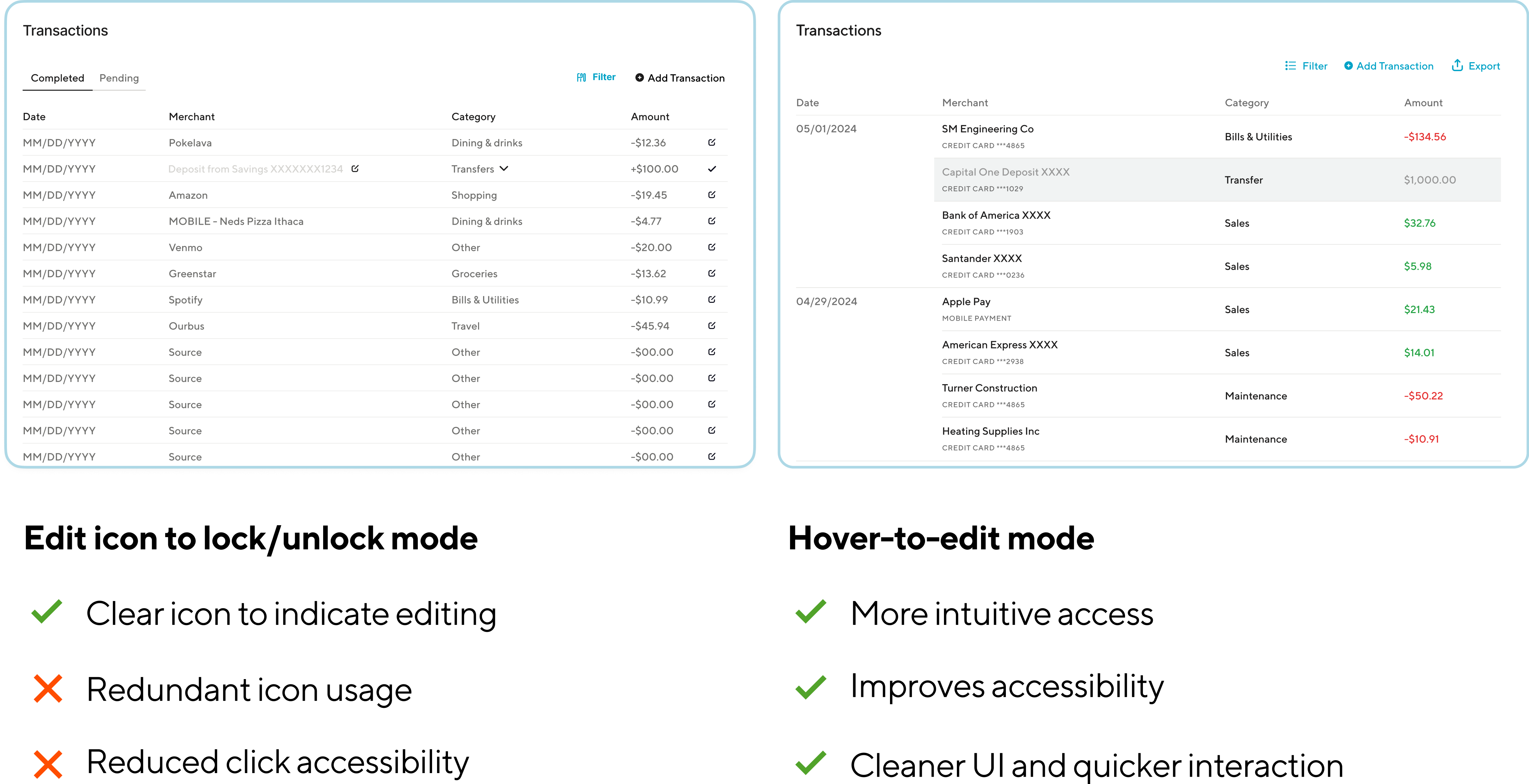
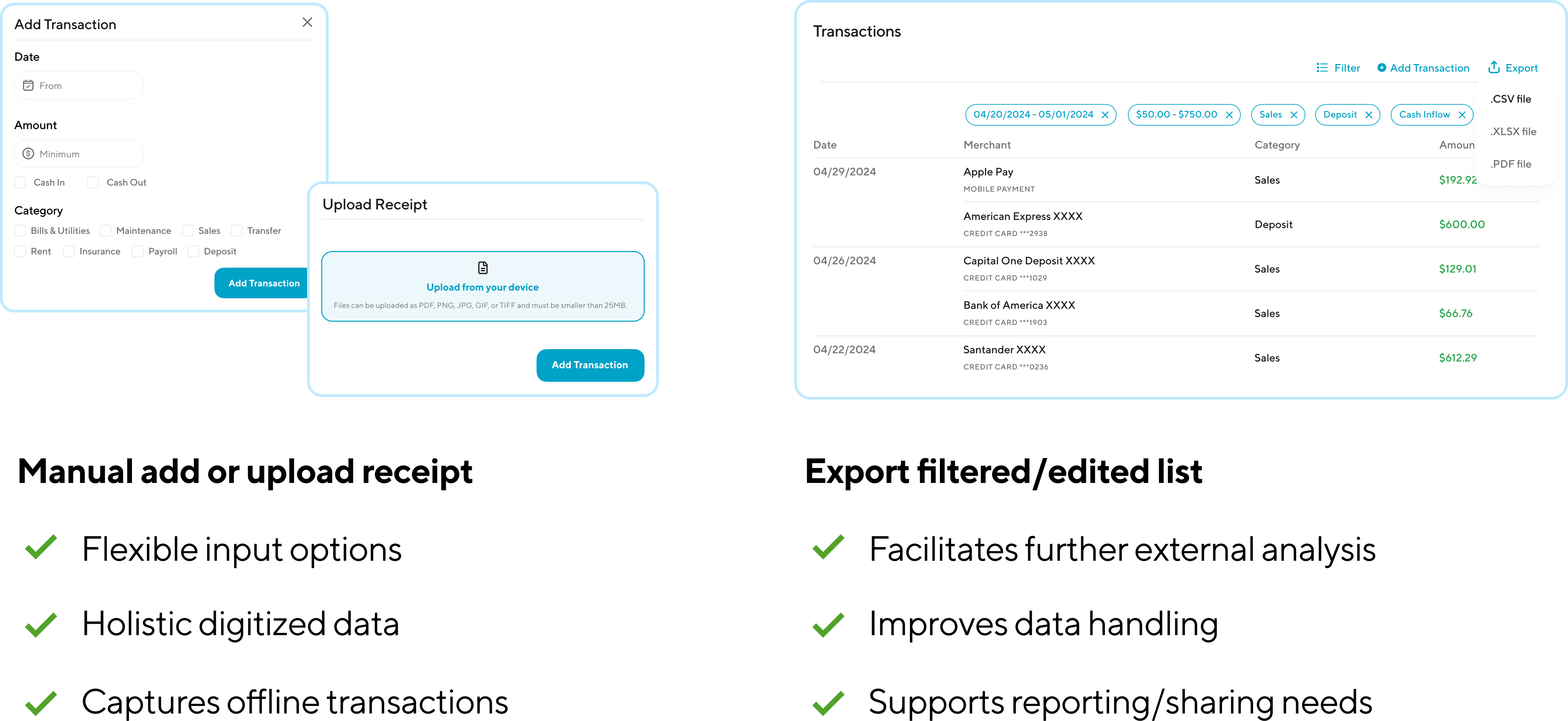
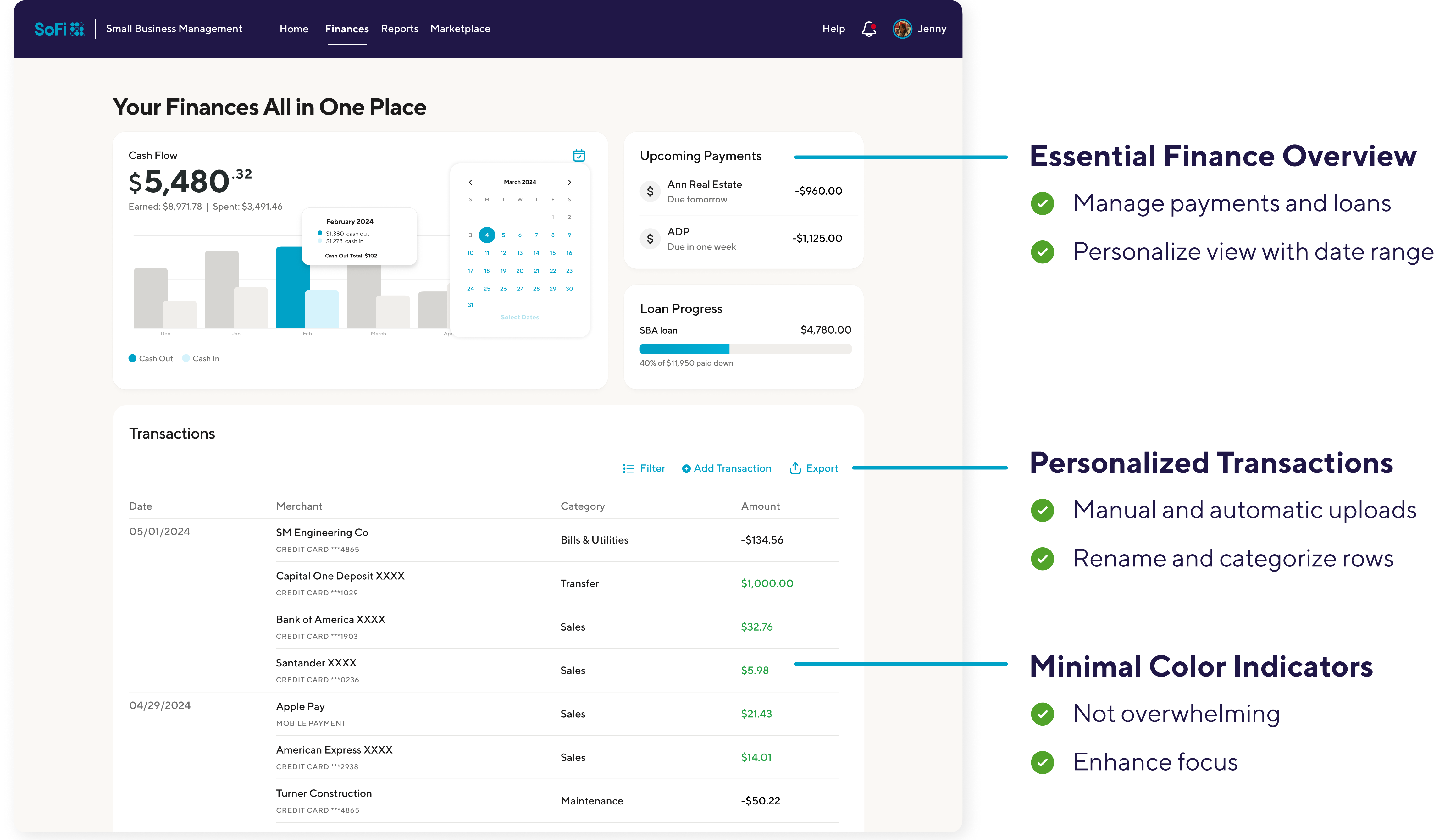
For a full demo of all features across the platform, please reach out to me!
User testing on the product to help us gather valuable insights into users interact with it and identify any usability issues. This will help us make informed design adjustments and improve the overall user experience.
This helps us understand what features boost engagement, refine areas that are underused, and ensure the platform effectively serves SMBs, driving adoption and growth.
Tailoring the platform to accommodate the unique needs of SMBs across various industries ensures features that are relevant and adaptable to specific business contexts. This promotes broader usability and increased adoption.